
Three Ways Mixta Changes the Game for Simulation
There’s a lot of hype right now about AI in training.
Some of it’s real. A lot of it isn’t.
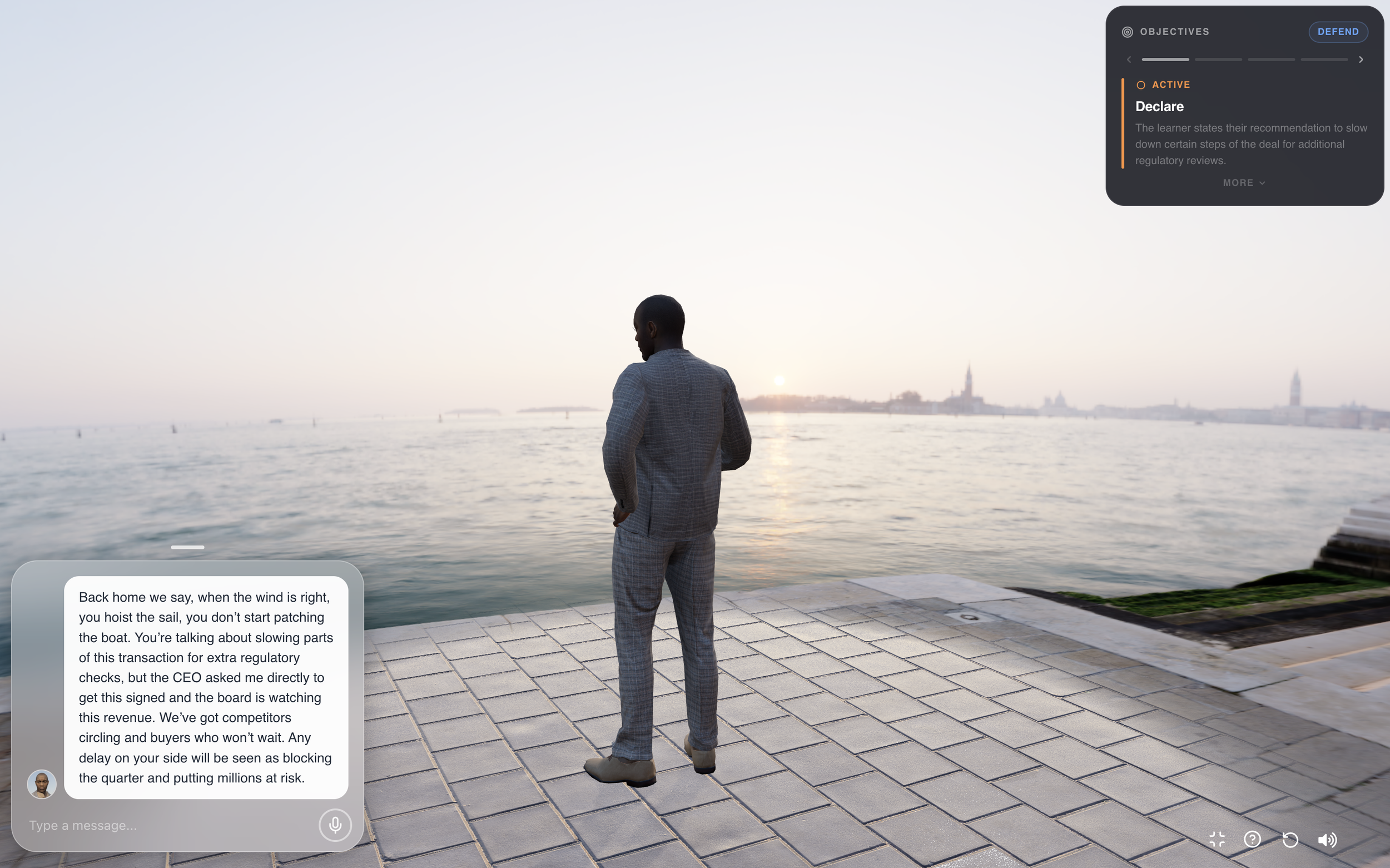
Mixta is one of the few things that actually feels like a step forward, not because it adds AI to simulation, but because it changes what simulation is.
The first thing you notice is how different the interaction feels. Most simulations today still run on branching logic. You pick from a set of options, follow a path, and eventually land on one of a handful of outcomes. It works, but it’s constrained, and you can feel those constraints the whole time.
Mixta breaks out of that. Instead of clicking through options, you’re interacting. You’re responding in real time, having conversations, making decisions in ways that aren’t pre-scripted. The experience feels a lot less like navigating software and a lot more like dealing with an actual situation.
That alone would be a big deal. But what’s happening behind the scenes is just as important.
In most systems, simulations are something you build once and then maintain forever. They’re static by nature, and updating them is usually slow and painful. Mixta flips that on its head. You define what matters, the goals, the constraints, the context, and the platform generates the experience. That makes it faster to create, easier to adapt, and way more flexible when things inevitably change.
And then there’s the part that really matters for organizations trying to take AI seriously. You can actually see what’s going on.
A lot of AI systems are black boxes. You get results, but not much clarity into how those results came to be. Mixta doesn’t work that way. Every interaction can be captured as structured data, so you can trace what happened, step by step, what someone did, how the system responded, and where things went right or wrong.
That’s a pretty big shift. It means you’re not just running simulations, you’re learning from them in a concrete, measurable way.
Put all of this together, and Mixta starts to feel less like a better version of what already exists and more like a different category entirely. Real interaction instead of scripted paths. Living systems instead of static builds. Clear insight instead of black box outputs.
It’s a different way to think about simulation.
And now, it’s available through Yet Analytics, with the ability to plug directly into your data and reporting systems if you want to take it even further.